

Solar Roof Systems in Southern California with Cira Energy
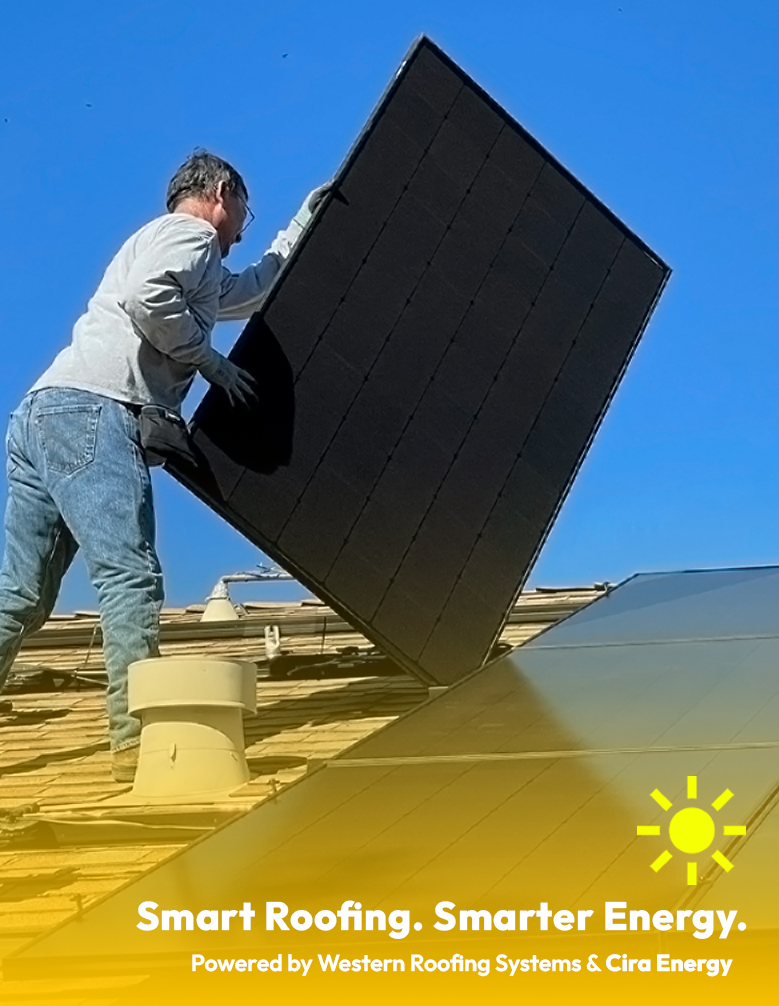
Cut Energy Costs with Solar Roofing in SoCal
Power your home with solar and slash energy costs for decades to come!
Western Roofing Systems has teamed up with Cira Energy Inc. to bring Southern California homeowners the strongest roofs and the smartest solar solutions.
Free Roof Inspection Included! We’ll make sure your roof is in top condition before going solar, so your investment is built to last.
Take the first step toward a smarter, more sustainable future today.
Residential Solar Roof Systems
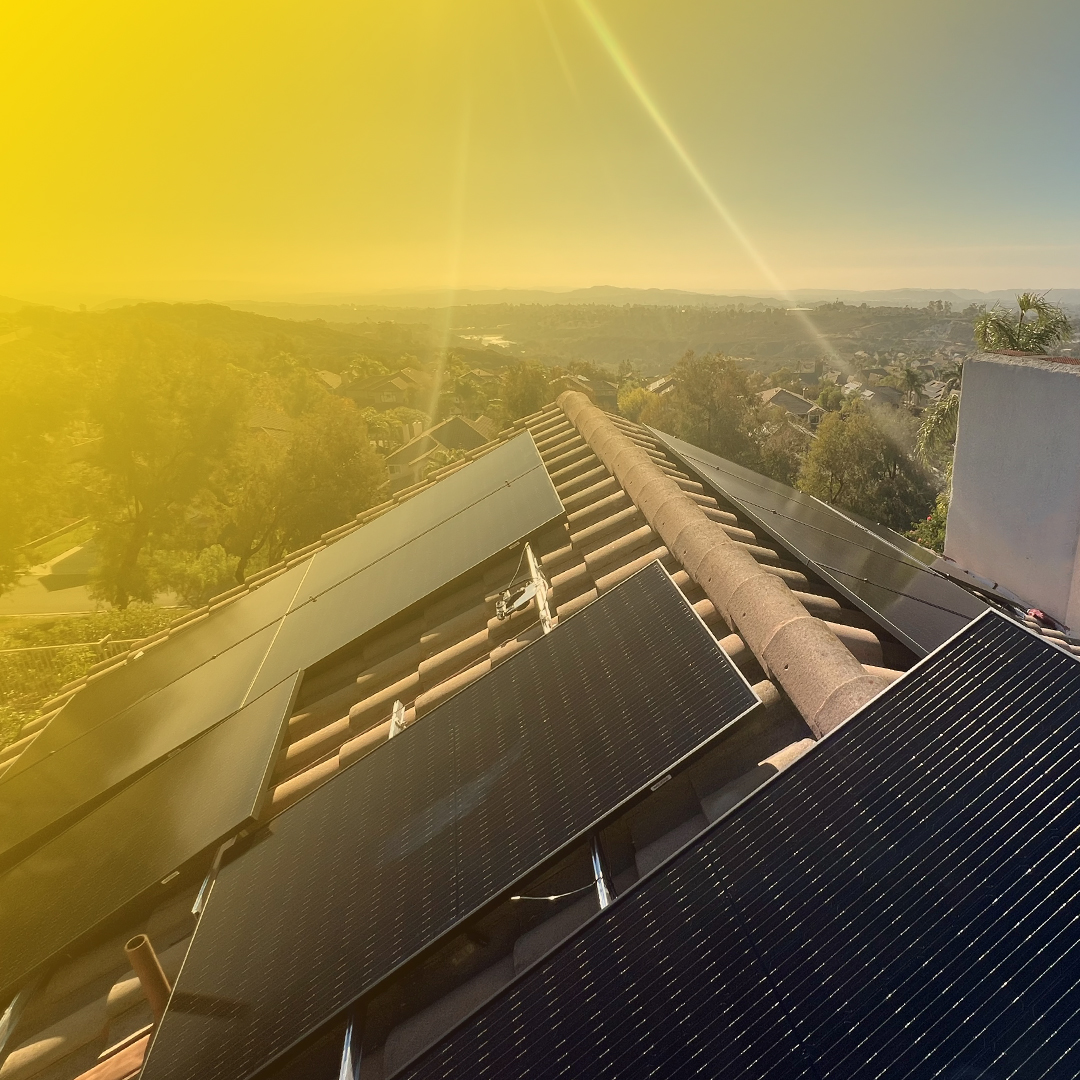
Did you know your electric bill could cost you over $62,400 in the next 20 years? Based on a conservative 5% annual increase, a $150 monthly payment adds up fast. But with solar roofing in California, you could save as much as $40,785 over the same period. Call our solar roofing experts today to see how much you could be saving!
Commercial Solar Roof Systems
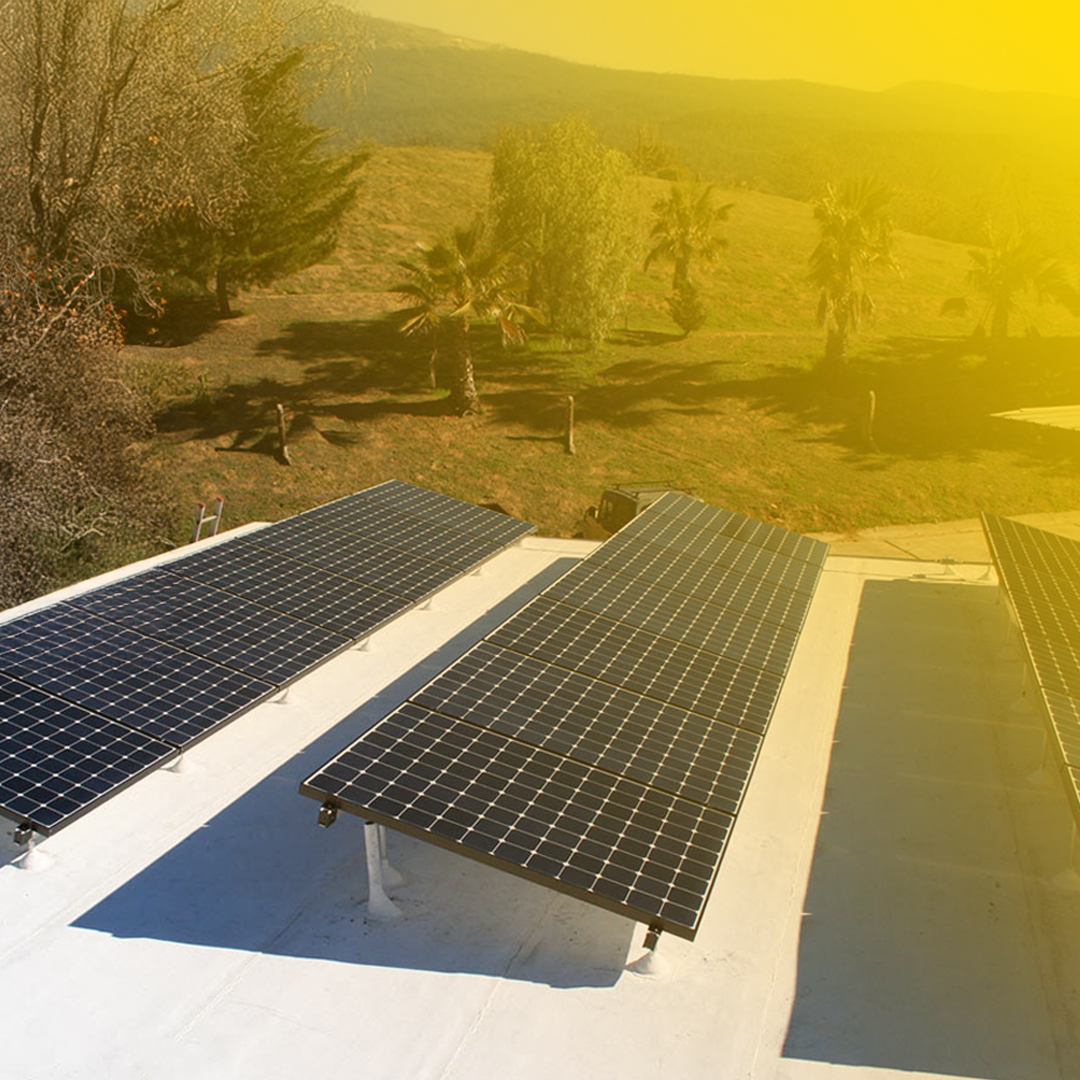
Looking for ways to manage your business energy costs? Cira Energy may be able to assist your organization in reducing costs across your entire organization’s energy needs. Contact us for more information or to schedule an onsite visit.
How Much Will you spend on your
electricity bill in the next 5-20 years?

From single family homes to multi family properties, we have the perfect solar power solution to fit your needs. Have kids that love playing video games all day and night? You will appreciate the savings a solar power system can bring to your household in Southern California while keeping everyone powered up without the stress of rising energy bills.
Adding solar panels to your roof is more than just about electricity. It is a smart investment that can significantly reduce your monthly expenses while boosting your home’s value. By harnessing the power of the sun, you will rely less on traditional energy sources, protect yourself from unpredictable utility rate hikes, and enjoy long term savings year after year.
Beyond the financial benefits, going solar is also a choice that supports a cleaner and more sustainable future for your family and your community. Every panel installed helps reduce harmful emissions and contributes to a healthier environment for generations to come.
Start saving today while making an eco friendly choice that keeps your home comfortable, your bills lower, and your planet greener.
Are solar roofs good for the environment?
Renewable energy is the natural choice for a cleaner, more sustainable future. By harnessing the sun’s power, you can reduce dependence on fossil fuels while enjoying clean, affordable electricity for your home or business. Installing solar roofing in California cuts energy costs and helps protect our planet for generations to come.
The Benefits of Solar Energy:
• Cleaner Air: Reduces harmful pollutants and improves air quality
• Lower Carbon Footprint: Helps decrease CO₂ emissions and combat climate change
• Energy Savings: Potential to save thousands on electricity costs over time
• Increased Property Value: Homes with solar panels often see higher resale values
Make the switch today and take control of your energy future with our solar roofing experts.
Learn How Solar Roof Systems Work
How does a solar system produce electricity?
Light striking the solar modules contains energy in the form of photons. When the photons hit the module’s silicon solar cells, energy is transferred, freeing up electrons. These electrons move through the silicon to the nearest wires and create positive and negative charges. When the millions of electrons flow through the wires of the solar electric system, they create electric power. The more intense the light, the more electrons that are available and the larger the electric current produced.
The electricity from the solar array is in the form of Direct Current (DC), much like a high voltage battery. It is of no use in our houses, however, because our appliances operate on Alternating Current (AC). To make the electricity usage, the wires joining all the solar modules carry this DC electricity from the solar array to the Inverter. The Inverter transforms the DC into AC electricity and feeds that electricity into your home’s existing wiring, typically through a circuit breaker in an existing panel. The inverter is usually located in a basement, garage or outdoors.
The inverter is a sophisticated electronic device with its own operating software, and it monitors the output of the solar modules. It also monitors the voltage and frequency of the electricity coming from the utility, so that it’s electric output precisely matches the utility-supplied electricity. For safety reasons, if the utility power is interrupted, the inverter shuts down and waits for the utility power to be restored. Five minutes after grid electricity is restored, it resumes normal operation.
At times the solar array will produce more electricity than is presently being consumed. The extra electricity produced naturally flows out of the house and onto the utility wires. The outward flow registers on the utility meter by spinning it in reverse, giving the solar electric system owner full credit for the excess electricity they produce. If the solar array produces less, then additional electricity from the utility flows in to supply the balance needed (of course, this will always be the case at night).
In the event you produce more electricity in any month than you use, you can carry the credit forward. Most customers produce more than they use on sunny days, building up a credit to be used at night or on days of lower production.
NO MORE utility tiers from power companies!
Since residential rates are “tiered”-meaning the cost per kilowatt-hour (kwh) increases as you use more energy – your cost to run your household items depends on the overall amount of electricity you use.The basic charge for residential customers covers some non-energy costs associated with providing basic services such as bill preparation, meters, meter reading, and customer accounting. This charge ensures that each residential customer, regardless of monthly usage, contributes equitably to cover costs associated with providing basic electric services.
Standard Residential Rate
The Residential Plan is the basic rate for residential customers and features a 4-tiered structure. Tier 1, or your baseline allocation*, is the established amount of energy (kWh) you need for lighting, cooking, heating, and refrigeration. This baseline is established by the California Public Utilities Commission (CPUC) and is based on where you live, the season (winter or summer), and whether your home is “all-electric” or uses both electricity and gas. *Baseline electricity allowances are an established level of kilowatt-hours (kWh) provided to residential customers. Pursuant to State law, baseline allowances represent the electricity necessary to supply a significant portion (50-60%) of the reasonable needs of the average residential customer.
Additional Charges
Every residential bill includes some non-energy costs for providing basic services like bill preparation, meter reading and customer accounting. This charge ensures that every SCE customer contributes equitably to pay for these services. Each residence is also charged for other CPUC-approved services like power generation, transmission or distribution. This charge is based on the number of kWh used and may change monthly, based on power generation and water resources factors.
Understanding Tier 1 (Baseline)
The “baseline allocation” is an established amount of energy (kWh) allocated for basic services such as lighting, cooking, heating, and refrigeration usage. Residential customers’ baseline allocation is established by the California Public Utilities Commission (CPUC) to ensure that all customers can purchase a basic supply of energy at the lowest rate in effect. Your specific allocation depends upon your baseline region, the season (winter or summer), and whether your home’s source of energy is electricity only or a combination of electricity and gas.
Photovoltaic Solar
A customer investing in a solar PV system should understand the economic payback on his or her investment, even if there may be strong non-economic (e.g. environmental) factors driving the purchasing decision. The initial investment depends on the system size. A convenient factor that takes this into account is the price per peak Watt (Wp) of the system. Hence, a 2000-Watt peak (2kWp) solar energy system costing $16000 in total (i.e. including installation) will correspond to a price of $8/Wp. In some countries, you may be able to obtain a grant or rebate towards the cost of the system, which will obviously improve the economic payback on the purchase.
Be Part of the Solution to protect southern california
Recent wildfires have shown how an aging power grid can put communities at risk. Over demand is not just causing rolling blackouts. It is also threatening homes and lives. A solar roof system helps you be part of the solution instead of adding to the problem. In sunny Southern California, solar power is a smart choice that benefits everyone. It can add value to your home or commercial property, reduce your energy costs, and in some cases even eliminate your utility bill.

SOLAR FAQ
Why Go Solar in Southern California
Cut your costs: Solar can significantly lower your utility bills over time.
Help the planet: Clean energy lowers CO₂ emissions and supports sustainability.
Legally protected benefits: Enjoy tax breaks and HOA protections in California.
Support statewide initiatives: Programs like Single‑Family Affordable Solar Homes (SASH) and legacy rebates helped make solar more accessible, though many are now closed, the state continues to encourage solar through net metering and other means.
When Did Solar Technology Develop?
Modern solar cells became viable in the early 1950s, powering satellites by 1959. By the mid‑1970s, they were used for remote and industrial applications, and by the mid‑1980s, in urban settings like traffic signs and emergency phones.
How does a residential solar system work?
Solar modules convert sunlight into DC power, which an inverter changes to AC power for home use. Excess generation during the day can be credited back to your utility via net metering; at night or during peak demand, your home draws from the grid.
Do I need a building permit to install home solar?
Yes, most installations require permits and must comply with building and electrical codes.
How many solar panels do i need?
It depends on your energy use, location, roof angle, and shading. But here’s a quick way to ballpark it:
Find your average daily electricity use in kilowatt-hours (kWh) from your utility bill.
Find your area’s peak sun hours (Southern California averages about 5 hours/day).
Divide your daily use by your peak sun hours to get the total system size you need in kilowatts (kW).
Divide that number by the watt rating of your panels (most modern residential panels are around 400 W or 0.4 kW each).
Example:
Daily use: 30 kWh
Peak sun hours: 5
30 ÷ 5 = 6 kW system size
6 ÷ 0.4 = 15 panels
This will give you a good starting point. An installer can then fine-tune based on your roof and energy goals.
Will solar increase my property taxes in California?
No! California’s Revenue and Taxation Code § 73 exempts active solar energy systems from being added to your property assessment—so your taxes won’t go up. This exclusion applies to installations completed prior to January 1, 2027. Learn More.
Can my HOA stop me from installing solar?
Pretty much not. California’s Solar Rights Act (Civil Code § 714) bans HOAs from unreasonable restrictions or outright bans. HOAs can’t increase your system cost by more than $1,000 or cut its efficiency by over 10%. Applications can’t be unreasonably delayed either. Learn More.
What is a solar module?
Also known as a solar panel, a module is a package of many solar cells wired together, sealed under weather‑resistant glass and built into a protective frame.
What is a PV array?
A PV array is a collection of modules connected to function as a single power-generating unit, mounted on a shared support structure.
What is a photovoltaic (PV) cell?
A photovoltaic cell, or solar cell, is the basic semiconductor unit that converts sunlight into electricity via the photoelectric effect. Cells are commonly made of doped silicon (or materials like cadmium telluride), stacked in layers to generate electrical flow when struck by photons.
How well do solar panels work in cloudy conditions?
They still work! On overcast days, solar panels typically produce around 50% of their output compared to full sun. In systems tied to the grid, the utility covers any shortfall; in off‑grid setups, battery storage can fill the gap.
How Long Do PV Systems Last?
They’re built to last over 30 years when professionally installed and maintained. Most failures stem from poor installation or electronic component issues (like inverters or controllers).
Can businesses use PV?
Absolutely! PV systems work for commercial properties, including integrated lighting, solar‑covered parking, and building‑integrated installations.
Why do other countries use more solar energy than the USA?
Because they often enjoy lower costs thanks to strategic policy support and economies of scale.
China, for example, dominates global solar with huge installations and manufacturing power—leveraging government subsidies, cost‑efficient supply chains, and massive clean-tech investment. As a result, solar in China can cost under $200 per kilowatt, compared with around $450 per kilowatt in the U.S. Learn More.
China’s output surpassed 350 GW of solar and wind in 2024 alone—way ahead of the U.S. Learn More.
Globally, solar is booming: It accounted for 96% of new power demand growth by 2022. Learn More.